


Exercising During Pregnancy
Should you be exercising while pregnant?
If you are pregnant and wondering if continuing to exercise is safe, you are not alone. If you Google “exercising while pregnant”, you are likely to get a multitude of hits with recommendations from various blogs, forums, and healthcare provider sites ranging from “Don’t do it” to “Of course you can still do pull-ups!” The Internet can be an excellent resource as you progress through your pregnancy, but it is important to be able to discern between anecdotal evidence, outright mistruths, and professional, evidence-based recommendations.
As you are likely receiving a list of “Do Nots” while you are progressing through pregnancy, maintaining a regular exercise program is very much on the “Do it!” list*. According to the American College of Obstetricians and Gynecologists, “Physical activity in pregnancy has minimal risks and has been shown to benefit most women, although some modification to exercise routines may be necessary because of normal anatomic and physiologic changes and fetal requirements” (ACOG, 2015)1. The benefits of physical activity during pregnancy are vast. While pregnant, some of the benefits of physical activity can include reducing maternal weight gain, reducing the risk of gestational diabetes, reducing gestational hypertension, reducing the risk for postpartum depression, and potentially reducing the need for Cesarean section and instrumental deliveries2,3. Need we say more?
Given all the benefits, it is important to know how to safely modify your exercise routine as you progress through your pregnancy. Whether you are a CrossFitter, Yogi, runner or do a little bit of everything, exercise modifications will be necessary to ensure safety for you and your growing baby. If you aren’t sure what exercises need modifications, or how to make those modifications, that’s where the Doctors of Physical Therapy at CSPT can help. Schedule an appointment today to learn how you can stay active and decrease pain throughout both your pregnancy and postpartum periods!
*With all evidence provided in this article supporting exercise during pregnancy, it is important to note that there are certain circumstances that exercise may be contraindicated due to safety concerns for mother and growing baby. Contact your obstetric provider to clarify your risk should you have any concerns.
References:
American College of Obstetricians and Gynecologists, Committee Opinion, 2015. https://www.acog.org/-/media/Committee-Opinions/Committee-on-Obstetric-Practice/co650.pdf?dmc=1&ts=20190725T1812495503
Mottola MF, Davenport MH, Ruchat S-M, et all. Br J Sports Med 2018;52:1339-1346.
Ruben Barakat, Mireia Pelaez, Carmina Lopez, Rocío Montejo & Javier Coteron (2012) Exercise during pregnancy reduces the rate of cesarean and instrumental deliveries: results of a randomized controlled trial, The Journal of Maternal-Fetal & Neonatal Medicine, 25:11, 2372-2376, DOI: 10.3109/14767058.2012.696165

2 Common Myths About Your Knees
Debunking some common myths about osteoarthritis, squats, and knee pain!
There is a lot of misinformation out there about knee health. Today, we are going to address 2 of the most common myths: (1) that osteoarthritis (“OA”) in the knee is due to “wear and tear” and is always painful, and (2) the idea that squats and similar exercises are “bad for your knees”.
MYTH 1: OSTEOARTHRITIS IS DUE TO “WEAR AND TEAR” ON YOUR JOINTS
You may be asking, what is OA and what causes it? Fundamentally, OA is a broad term that refers to inflammation in and around the joints between our bones, including our knees. OA is extremely common in humans, increasing with incidence as we age. In fact, it is totally normal to have an increase in joint OA as we age without any symptoms whatsoever (Culvenor). On top of this, OA has not been shown to be related to increased exercise or “wear and tear” on your body. OA is actually less common in runners and other people who put a lot of mileage on their knees (Chakravarty, Lo). In fact, a number of studies show that people who load their knees regularly (including people who lift heavy weights) actually have thicker knee cartilage and healthier knees overall (Hartmann 2013). With that in mind, many healthcare providers have started (rightfully) referring to OA and similar issues as being “wrinkles on the inside” and not really something to worry about.
MYTH 2: SQUATS ARE BAD FOR YOUR KNEES
So are squats bad for you? The second article linked above that suggests deep squats are “bad for your knees” may reflect an old opinion, but the idea is still out there: this Bodybuilding.com article asserts that, “among bodybuilders who have knee problems...squatting is the only culprit”. Some of their recommendations have merit, but this fear-mongering about squatting is heavily misguided. As a matter of fact, research indicates that squatting through a full range of motion is protective against breakdown in the knee (ibid). The theme in the current research is that loading your body and challenging it will actually make you stronger, as long as you respect your body’s need to recover from these loads.
Although deep squats are not harmful, they also may not be necessary. For example, a soccer player probably does not need a whole lot of full-range strength; most of their action occurs in a much taller posture, and so they can probably get away with shallower squats. Different squat depths load different muscle groups differently (Caterisano), so if you want to work specific muscles, you might want to pick a particular depth. There is some evidence that shallower squats seem to translate better to things like sprinting and jumping (Rhea), but this is definitely not a hard and fast rule (Hartmann 2012).
At the end of the day, our bodies are strong, robust, and able to adapt to a huge variety of loads and challenges. As long as we are able to give our bodies time to recover and adapt, we can handle almost anything over the long term. Even if you have some OA in your knees, or you have a family history of OA, you do not necessarily have to limit your activities! If you do have pain with an activity that you want to keep doing, consult a healthcare practitioner who can help you modify your activity and teach you how to train better. Knee pain is not a death sentence, OA is not a death sentence, and your body is stronger than you might think.
So get out there and get exercising! And if you’re a fitness or healthcare professional, stop scaring people with bad science! #unnecessaryfearmongering
References
Caterisano, A., Moss, R. E., Pellinger, T. K., Woodruff, K., Lewis, V. C., Booth, W., & Khadra, T. (2002). The Effect of Back Squat Depth on the EMG Activity of 4 Superficial Hip and Thigh Muscles. Journal of Strength and Conditioning Research, 16(3), 428–432. doi: 10.1519/00124278-200208000-00014
Chakravarty, E. F., Hubert, H. B., Lingala, V. B., Zatarain, E., & Fries, J. F. (2008). Long Distance Running and Knee Osteoarthritis. American Journal of Preventive Medicine, 35(2), 133–138. doi: 10.1016/j.amepre.2008.03.032
Culvenor, A. G., Øiestad, B. E., Hart, H. F., Stefanik, J. J., Guermazi, A., & Crossley, K. M. (2018). Prevalence of knee osteoarthritis features on magnetic resonance imaging in asymptomatic uninjured adults: a systematic review and meta-analysis. British Journal of Sports Medicine. doi: 10.1136/bjsports-2018-099257
Hartmann, H., Wirth, K., Klusemann, M., Dalic, J., Matuschek, C., & Schmidtbleicher, D. (2012). Influence of Squatting Depth on Jumping Performance. Journal of Strength and Conditioning Research, 26(12), 3243–3261. doi: 10.1519/jsc.0b013e31824ede62
Hartmann, H., Wirth, K., & Klusemann, M. (2013). Analysis of the Load on the Knee Joint and Vertebral Column with Changes in Squatting Depth and Weight Load. Sports Medicine, 43(10), 993–1008. doi: 10.1007/s40279-013-0073-6
Lo, G., Driban, J., Kriska, A., Storti, K., Mcalindon, T., Souza, R., … Suarez-Almazor, M. (2015). Habitual running does not increase risk for symptom or structure progression in those with pre-existing knee osteoarthritis: data from the osteoarthritis initiative. Osteoarthritis and Cartilage, 23. doi: 10.1016/j.joca.2015.02.070
Rhea, M. R., Kenn, J. G., Peterson, M. D., Massey, D., Simão, R., Marin, P. J., … Krein, D. (2016). Joint-Angle Specific Strength Adaptations Influence Improvements in Power in Highly Trained Athletes. Human Movement, 17(1). doi: 10.1515/humo-2016-0006
The FAQ's of Functional Dry Needling
Everything you ever wanted to know about Functional Dry Needling!
In the last few years the use of dry needling in physical therapy has grown exponentially, and for a good reason. Research has shown that dry needling is a highly effective modality for addressing dysfunctions in skeletal muscle, fascia, and connective tissues. Despite its recent increase in popularity, dry needling is a technique with origins dating back to the early 1900s. Since its inception, numerous advances in the methodology for dry needling have made it an excellent tool for modern clinicians in physical therapy. If you are considering dry needling, here are some frequently asked questions and answers to consider:
What exactly is dry needling?
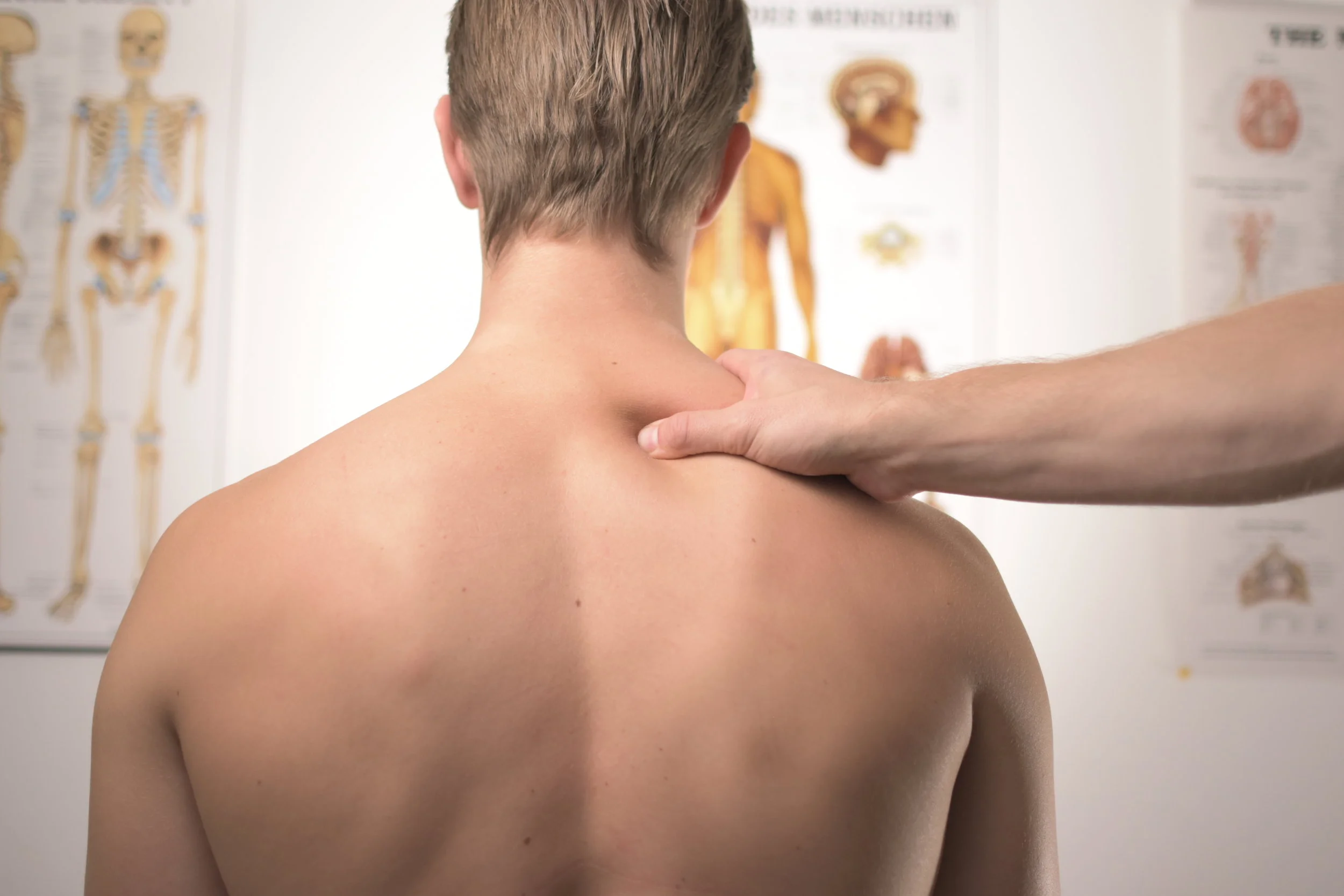
Dry needling is a technique that involves the use of a thin, rounded monofilament inserted into soft tissue with the goal of decreasing muscle tension, pain, and helping to reset muscle activation patterns. Dry needling results in a deep muscular release that can allow for improvements in pain, muscle tension, and movement patterns. Functional dry needling (FDN) refers to a specific school of thought developed by Kinetacore, a dry needling continuing education company. FDN incorporates a multi-faceted model that largely emphasizes the neuromuscular system and changes that occur within that system when there is dysfunction or compensatory patterns that arise within the human body.
What does functional dry needling actually do?
The insertion of a needle into dysfunctional tissue can cause a host of physiologic improvements within the muscle. FDN has been shown to increase blood flow to targeted tissues,1 decrease muscle banding by restoring a normal length-tension relationship between muscle fibers (thus, improving the contractile abilities of the tissues), and decrease pain sensitizing agents.2
How is dry needling different than acupuncture?
Acupuncture is a form of dry needling. Functional dry needling (FDN) is different from acupuncture in that it is rooted in Western medicine whereas acupuncture is based on Traditional Chinese Medicine. Functional dry needling and acupuncture use the same monofilament needles, with different intentions. In a very simple sense, FDN looks to the neuromuscular system as a root of dysfunction and acupuncture looks to restore the body’s life energy, or “qi” through needle insertion on invisible energy channels called “meridians”, with each meridian being associated with a different organ system.
What functional dry needling is NOT
Functional dry needling is not a panacea! FDN is most effective when combined with movement-based therapy. FDN is a tool and should be paired with a comprehensive physical therapy treatment program for maximal benefits.
What can I expect with functional dry needling?
You may or may not feel the insertion of the needle. Many people may report a deep muscle ache with the treatment which is an indication to the clinician that the treatment is eliciting the desired response. After treatment, increased range of motion, decreased muscle tension, and improved muscle activation are typically the desired outcomes. Soreness in the targeted muscle is normal up to 2-3 days after treatment as well.
Are you still curious whether functional dry needling may be something that can help you? Call one of the Doctors of Physical Therapy at Colorado Sports Physical Therapy to schedule an initial evaluation where we can discuss treatment options that will best suite you!
References:
Skorupska E, Rychlik M, Pawelec W, Samborski W (2015) Dry Needling Related Short-Term Vasodilation in Chronic Sciatica under Infrared Thermovision.Evid Based Complement Alternat Med 2015: 214374.
Hsieh YL, Chou LW, Joe YS, et al. Spinal cord mechanism involving the remote effects of dry needling on the irritability of myofascial trigger spots in rabbit skeletal muscle. Arch Phys Med Rehabil. 2011;92(7):1098–105.

Physical Therapy for the Active Pregnant and Postpartum Mom
Pregnancy and Postpartum does not mean that you have to be in pain! See what we have to say about staying active throughout the baby process. Schedule an appointment today with our experts who can help with all the aches and pains you may be having!
For those of us who have had the experience of pregnancy and postpartum life, you know that not only does your life turn upside down, but your body changes immensely. Most of the time, we chalk it up to the normal aches and pains of growing and birthing a human, but in reality, you don’t always have to just suck it up and deal with it. As someone who has dealt with managing these pains with and without a physical therapist, I know that physical therapy can help you immensely, both during and after your pregnancy.
I went into my first pregnancy feeling great. I was lifting, spinning, and doing general workouts until I was about 34 weeks pregnant, but I still suffered from sacroiliac pain and sciatic nerve pain that had me laying on the floor in tears and scooting around my office relying on my peers to help me with treating my patients. I had an unplanned C-section for this pregnancy and the recovery was brutal, especially living in a walkup apartment and on a subway stop with 4 flights of stairs instead of an elevator. After 6 months, I finally worked out the kinks in my body and was almost pain-free, but I definitely did not get back into fighting shape.
Fast forward two years and, when I became pregnant with my second daughter, I knew that I needed more help. Thankfully, I had phenomenal resources around me and I would be remiss if I did not give a shout out to Dr. Natalia Farnsworth, PT. Not only did she work through pain that would cause my leg to give out every time I turned right on my skis (obviously, not ideal), but after my pregnancy she got me going within a week after my second unplanned C-section.
To be clear, I was not getting into my pre-pregnancy jeans within that first week, but compared to round one, I was able to walk better, feel stronger, and negotiate those subway stairs more confidently in a fraction of the time. I went from being barely able to engage my core to do a pelvic tilt to swinging a 25 lb kettlebell by week 8 post-pregnancy. My 3 year old diastasis recti was gone, my hip pain was gone, and I was well on my way to becoming the strongest and fittest I have felt since I was competing in gymnastics at college.
Personal experience aside, as a clinician, I have also seen the benefit of physical therapy for my pregnant and postpartum patients. In the medical field, we know that exercise during pregnancy can help to decrease the risk of gestational diabetes, so our ability to help you manage your orthopedic pain during that time can help keep you active. For those who are trying to return to an active lifestyle post-pregnancy, it is helpful to have someone who can give you tips to get your strength and flexibility back.
You may be asking yourself, why doesn’t everyone get physical therapy for these aches and pains? Why doesn’t my doctor recommend PT? The simple answer is that we, as a profession, have come a long way from the days of just using hot packs, ultrasounds, and stim as the basis of our treatments. Now, we use combinations of exercises, manual techniques, and a lot of patient education as the foundation for our plans of care. As practitioners, we are working to educate not only our patients, but other medical providers of the benefits of physical therapy during pregnancy and post-pregnancy. As we continue to watch the physical therapy practice develop, we believe that this type of care is quickly becoming the norm.

When is “No Pain No Gain” Actually True?
We all know that when you work hard for something, the results can be spectacular, however there can also be a downside to that. Who hasn’t heard the phrase “no pain, no gain”? As a young athlete, I know I must have heard it almost every day in the gym, and I continue to hear it to this day. While there is some truth to the statement, you must remember that all pain is not created equal. In fact, pain is something that has evolved with humans as a protective mechanism with our body basically telling us, “if it hurts, don’t do it”. Here are some other helpful thoughts when dealing with pain.
1. How much pain are you in?
This is one of the first questions your physical therapist may ask you. It seems like common sense that the more pain you are in, the worse, but there is something very important to keep in mind. Pain can be a muscle inhibitor. This means that when you are actively causing pain, your muscles most likely are going into protection mode and will not work optimally. Think about those lovely times that your sibling or friend gave you a dead leg and you immediately fell to the floor. That gives you a pretty good idea of muscle inhibition through pain.
2. Where is your pain?
This is a big one. Pain in your joint is very different than muscle pain and really, there should never be a time that it should be happening. Do your knees hurt when you squat? Stop. Does your shoulder hurt when you throw? Stop! Most of the time, this is correctable with strength, flexibility, and education, but they should never happen! And furthermore, you should be able to do these activities relatively pain free.
3. What kind of pain are you having?
Here is another question that most of you should have heard and it helps us make clinical decisions when it comes to your diagnosis and plan of care. Sharp, stabbing, shooting pain are all red flags for us. They can indicate acute, active injury with possible nerve involvement. If you feel this kind of pain- stop what you are doing and seek help! Pain that is more along the dull, achy side is usually more indicative of chronic conditions, but is still important to address. Don’t wait to address it, because it can be harder to get rid of the longer you wait.
4. How long does your pain last?
Do you go for a run and your pain lasts for a week? That usually is not a great sign. Delayed onset muscle soreness, or DOMS, is the technical terminology for the soreness you have 24-72 hours following a hard workout or that first day back on the slopes. This is a normal muscle reaction that will subside with rest and gentle movements (remember that pain can actually make your muscles feel weak). Anything longer than that could indicate actual injury. A good general rule is pain that lasts for anything more than a few days should probably be checked out.
To be fair, the medicine of pain science is far more complicated than what is presented above. In fact, there are physicians that focus only on pain management. However, you can learn to be better aware of what your pain means and how to manage it when you can learn to describe it. No pain no gain should not be a definitive lifestyle, but an idea of how you can work hard to gain specific results.